Outline of the 4th Australian Generation – 33 cousins (18 Alf, 15 Amédée)
A. Descendants of Alf
AA. Cedric HolroydAB. Eric George de TremblayAC. Enid Valerie ClaudiaACA. Elizabeth Leslie (Liz) ACB. Margaret Leslie (Margot) AD. Louis AlphonseADA. Malcolm Holroyd ADB. Donald Walter (Don) ADC. Neil Louis ADD. Eric Clive (Clive) AE. Glynne TasmanAEA. John Holroyd Warne AEB. Glynne Eric Warne (Eric) AEC. Rosalind Louise (Ros) AED. Julie Margaret AEE. Robert Tasman Warne (Bob) |
AF. Alphonse James Yorke (Yorke)AFA. Phillip Yorke AFB. Cedric Hugh AFC. Eril Lorna AG. Yniol Alfred (Bobby)AGA. Alison Margaret AGB. Geoffrey Yniol (Geoff) AGC. David Molyneux AGD. Cedric Ian (Ian)
|
B. Descendants of Amédée
BA. Horace Amédée Félix OllivierBAA. Paul Félix Ollivier BAB. Neville Clarence BAC. Elaine Marie Clemence BAD. Marcus Mortimer BAE. David Francis Tasman BAF. Elizabeth Marie Louise BAG. Rosemarie Margaret Grace BB. Sylvia Alma Janet BC. Evan Paul (Paul)BCA. Ian Robert BCB. Rodney Amédée
|
BD. Lester QuintusBDA. Graham Lester BDB. Douglas Gordon Finlayson BDC. Howard Arthur BE. Arthur Noel OctaveBEA. Peter William George BEB. Louise Ruth (Lou) BEC. Roger Stephen Evans |
Available Notes on members of the 4th Australian Generation
ADC. Neil Permezel
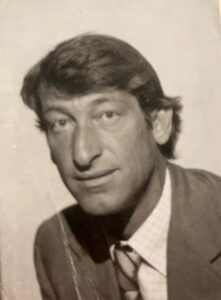
Neil was the third of four brothers: Malcolm, Donald, Neil and Clive – and the last surviving brother.
Neil was brought up in Seymour. His mother, Addie, was convinced she was going to have a daughter and had chosen the Helen — until little Neil proved otherwise! With three brothers to keep him company, the home was always full of energy, noise and mischief. Born and raised in country Victoria, Neil spent his early school years at Seymour, where free summer days were spent swimming in the Goulburn River
His father, Louis, worked as a stock and station agent. The family moved to Benalla in 1952. Neil followed his older brothers to attend boarding school at Scotch College in Melbourne in 1953, where he was placed in Arthur Rob House. Although not known for academic prowess, Neil distinguished himself as a talented sportsman — excelling at football and cricket. Neil left school at 15 having finished leaving certificate.
At the end 1956, Neil moved to Horsham and started work as a Stock and Station Agent for Goldsbrough and Mort. Neil was drafted to undertake military training in May 1958 until August 1958 and returned to Seymour.
In 1960 he moved to Melbourne and started selling Encyclopaedia Britannica. At this time a highlight in his sporting life was being selected to play A-grade cricket in the UK – a dream that was cut short by a car accident that left him with a broken elbow.
Ever adventurous, Neil instead, 100 pounds and took a working holiday to New Zealand, in 1963. At first, he lived with Struan’s family in Ranfurly on the South Island. In 1964 Neil, moved to Te Awamutu on New Zealand’s North Island, where he sold farm machinery and cars. They had a party at Neil’s share-house to celebrate his 25th birthday — and at this party he met Anne. Anne was 22 and traveling from Scotland, working as a nurse. Neil asked Anne for her phone number. A week later, fate intervened again: Neil, added petrol to a pile of leaves on fire— only to set himself alight. His housemate tracked Anne down phoning the hospital switchboard, where Anne worked and informed her of Neil’s accident. Anne went to visit him on her day off (after getting her hair done), only to find he had been discharged.
Later Neil invited Anne to the Cricket Ball — and despite arriving an hour late, the orchid corsage he brought melted away any doubts.
In 1966, they married in Scotland. They lived in Invergowrie for 2 years and Neil worked at Roneo Neopost selling Franking machines.
As a newly married man in Scotland, Neil achieved two memorable holes-in-one: one at the prestigious St Andrews Links (where, as a non-member, he playfully “greased” the wheels by presenting the head green-keeper with a bottle of whiskey in a brown-paper bag to get on the course) and the other at Rosemount Golf Course in Angus-shire. He adored Scotland — the rugged outdoors, deer-shooting in the Highlands, fly-fishing and the wide-open landscapes (though perhaps less of the cold!). He loved Anne’s family, but it was always the plan to move back to Australia.
Two years later, in 1968, Anne & Neil relocated to Australia, just in time to celebrate Clive and Joh’s wedding. On his return to Australia, Neil and Anne moved in with his Mum Addie in Vale St and 6 months later purchased Adrian St, the site of many memorable parties. In 1988 they sold Adrian St and developed Kilby road and moved into unit 2. He started working at Dustings of Burwood selling cars. Six months later he met someone, that got him started in real estate working for Woodard’s. Neil stayed there until the late 1990’s and was one of their top salesmen. He was very highly strung and liked working on his own, he didn’t agree with his managers and refused to go to sales meetings or to do paperwork.
He left Woodard’s and went and worked with Ben Sudano in Hartwell for 5 years and later worked at Kingsford Properties, selling units off the plan, in Southbank. Neil got involved financially in developments that included a hotel, units and apartments. Neil retired in around 2000.
Neil truly lived more than his nine lives. When he was 49, he survived being struck by a panel van as he crossed the road to pick up his mum from the bus stop after she had been visiting her sister Olive in Mansfield. Anne remembers the shocking sight — Neil flying like a rag doll. Despite suffering broken ribs, a fractured collarbone, and severe bruising, he spent two weeks recovering in Box Hill Hospital and, with characteristic resilience, quickly bounced back.
Neil had a lifelong passion for horse racing. One of Neil’s greatest joys was sharing his love of racing with his dear lifelong friend, Robert Riggall. The two spoke every day, plotting their next “winning quaddie” with enthusiasm. Together, Neil and Robert — and sometimes Anne — owned horses in several syndicates. Neil loved studying the form guide, and his knowledge of breeding, trainers, and jockeys was second to none. It wasn’t just a hobby; it was a true passion that brought him endless enjoyment.
Neil and Anne had many trips to Scotland and visited family Anne’s family there. Neil loved Anne’s family. In fact, he did a trip to Scotland at 85.
AEA. John Holroyd Warne Permezel
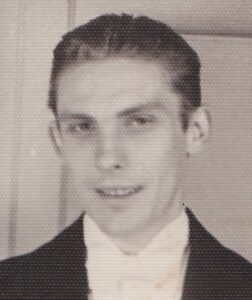
John grew up in the family home at 4 Ferguson St East Malvern as the eldest of the five children. He was educated at Lloyd Street State School, then Malvern Grammar and finally Wesley College. He excelled both academically (Dux of Wesley College 1941) and at sport, particularly athletics. He won numerous under-age events but had the misfortune to be running against a future Olympian at Wesley in the same age group – John Bartram. However, John excelled at hurdles and represented Wesley in hurdles and relays. He won the last APS event held at the MCG – the Under 17 hurdles. A record of this achievement was displayed for decades in the stairwell of the old MCC pavilion. John also rowed in the winning first crew of 1942.
In 1950, John married Patricia Sholl, daughter of Melbourne Barrister (Reginald Sholl) who subsequently became a Supreme Court Judge, receiving a knighthood in 1966. They had 3 children, Penny, Michael and Simon.
Having studied Engineering at the University of Melbourne, John commenced work in the private sector but soon moved to the Board of Works and then the Commonwealth Department of Transport. Amongst his particularly noteworthy tasks included building the runway at Essendon Airport and managing the lighthouses around the coast of Australia. His later career was in road safety. He represented Australia at many international conferences on road safety, dating back to 1964. When the Commonwealth Dept of Transport moved to Canberra, John switched to the road safety division of the Victorian Public Service where he remained until retirement.
Amongst his many achievements outside work was single-handedly building his own two-storey weatherboard home at 29 Charlotte st Glen Waverley. His father (Glynne) helped by making the tea and bringing a steak on weekends! He was particularly proud of designing a “box girder” that supported the whole upper storey across a span of about 8 meters.
His passion for the Victoria countryside began with early visits to his maternal grandfather’s farm at Glenorchy in the 1930s. In ca 1970, he purchased his own “bush block” in the Strathbogie Ranges.
In retirement, he vigorously pursued genealogy and we owe much of the material on this website to his work.
AEB. Glynne Eric Warne Permezel (Eric)
Eric was two years younger than John and followed John through Lloyd Street, Malvern Grammar School then Wesley College. Where John was the mathematician and scientist, Eric was much more into the humanities. He graduated in law from the University of Melbourne and followed his father and grandfather into the legal profession. He rose to be a senior partner in the city law form of Blake and Riggall – known in the family and “Snake and Wriggle”.
He married Barbara Challingsworth and they had three children Andrew, David and Sarah. The boys followed their father’s education at Malvern Grammar then Wesley College. Sarah went to Lauriston.
The early family home was in Coppin Street East Malvern – not far from Central Park and in close proximity to Ferguson St where Eric grew up. The family later moved to a magnificent house in Stonnington avenue Toorak – complete with a grass tennis court.
Eric’s childhood had been complicated by glomerulonephritis, leaving him with long standing hypertension. Probably as a consequence, he developed a basilar artery aneurysm at a young age and died aged only 55 years.
AFA. Phillip Yorke
Philip was the eldest son of Yorke and Lorna. He married Audrey Guy in 1944 and had five children: Nanette, Deidre (Dee), John, Guy and Jacquelyn. The last born had Down’s syndrome and died in infancy.
Philip began on a farm at Tanybryn near Apollo Bay but after a few years moved to Colac where he developed a successful farm supply business.
AFB. Cedric Hugh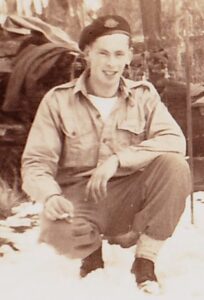
Cedric was the second son of Yorke and Lorna.
He started school when he was 4 and spent the last few years of school at Scotch College and matriculated at the equivalent of today’s year 12 when he was 15. Typical of Cedric he didn’t think this was because he was particularly smart but had more to do with the quality of the teachers at the school.
One memory from his childhood is when he was 10 he built a trailer to pull behind his pushbike and he and 2 mates rode 90 miles to Leongatha to camp for a few days. Food was rabbits they shot with the short barrel .22 rifle his father bought for him. How times have changed. He spent a lot of time with his cousins at Yackandandah and appears to have taken to the country life.
After leaving school he worked for T&G insurance and started a Cambridge University Actuarial Science course by correspondence. There were 9 applicants from Australia that year and he was 1 of the 3 that were successful. The text books were in German so he had to learn some of that language as well.
He enlisted for the army at Caulfield, Victoria on 14th February, 1944, when he turned 18, he joined the 2/7th Cavalry Commando Regiment. He served at Boiken near Wewak on the northern side of New Guinea for about 5 months until the war ended. He was one of the last groups to be deployed to New Guinea, and knew they would be be the last to leave. That meant he was in for a wait of at least several months before he could go home, so he volunteered for the Occupation Forces in Japan, where he spent 18 months working on the docks at Kure, Shikoku.
He was discharged from the army on 9th July 1947 and had trouble settling back into civilian life. He tried living in the city and continuing his studies but just wasn’t happy there. He had always wanted to live in the country. He discontinued his actuarial studies with Cambridge with only about a year to go. Then spent a few years as a travelling Insurance salesman in western NSW around Ivanhoe and Tibooburra. Around this time he would often spend time with Clyde Sykes a dog trapper and brumby wrangler from East Gippsland. He worked on a few different farms in southern NSW before working for Peter Edwards on his farm “Mayfield” at The Rock. He married Fay, one of Peters daughters a few years later and they bought their own farm “North Mayfield”. He built the “North Mayfield” house from a recycled Air Force barracks over a four year period. Cedric and Fay had 4 children, Julie , Rex, Jenny and Lindy. They ran sheep and cattle and grew wheat, barley and oats on the farm, Rex and his son Mark continue to farm on “North Mayfield” and “Mayfield”.
Cedric used to help his stock and station agent on sale days at the Wagga saleyards for some additional income. First Younghusbands and later Bryan Hamilton & Co where they noticed he was very good with figures. When their accountant passed away suddenly they asked him if he would take on the role temporarily to keep the business running smoothly. About a month later a Partner of a well respected accountancy firm went around to meet Cedric wondering what sort of mess would have to be sorted out as Cedric had been described as ‘ this bloke that helps with yard work on sale days that is good with figures’. The partner was stunned and left the meeting feeling Cedric understood accountancy better than he did. This became a full-time job and he continued in this sort of role for a few decades, during this time he developed a streamlined bulk-billing system for the Wagga livestock marketing centre. This system was adopted in several other livestock marketing centres.
He was secretary of The Rock RSL Club for many years and volunteered for Wagga Wagga Legacy Club for over 30 years. He was actively working for Legacy until he was 85 years old.
AFC. Eril Lorna Permezel
Eril was the daughter of Yorke and Lorna and the young sister of Philip and Cedric. She was only 11 years old when her mother died in 1944.
Eril was Educated at St Michael’s Grammar and lived with her father in Ormond.
Tall, elegant and a heavy smoker, Eril has been described as “Bohemian” in character. She appears to have been very popular – but “different”. She worked in the City in retail.
Eril unfortunately developed cancer at a young age and died at only 43 years of age. She remained unmarried.
AGA. Alison Margaret Permezel
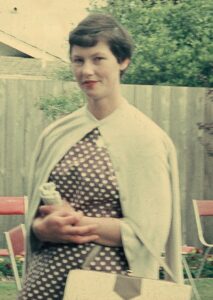
Alison was first born of Yniol (Bobby) and Margaret (Jean) Permezel, being raised in the family home in Yackandandah. She attended the primary school in Yackandandah. Jean was unhappy about sending Alison on the bus to the Beechworth High School, so she organised for her to attend the local convent. Those at the school was warned that Alison was not catholic but by the end of the first week, Alison recalls that she could say all her “Hail Mary’s” from the Catholic Rosary!
After 3 years at the convent, Alison’s education moved to be a boarder at Korowa Anglican Girls School in Glen Iris. Her cousin Ros (1930) was at the school as was Ros’s young sister Julie (1937). The school was close to her uncle Glynne (1898) at Ferguson St where Alison spent many Saturdays with the two girls, John (1925), Eric (1927) and young Bob (1941). She remained a lifelong friend of Ros along with other cousins including Liz Escott (1928) and Eril (1933). Alison trained as a nurse at the Alfred in Melbourne from 1951-1954. In the year before beginning nursing, she spent time with Yorke and Eril at their home in Ormond. She remembers being visited In Yackandandah by John (1925) and his new wife Pat on their honeymoon in 1950.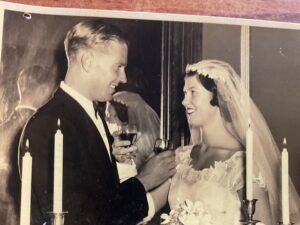
Alison married an old Wesley Collegian, John Hauser in 1954. They had three boys: Phillip (1955), Malcolm (1956) and Jonathon (1958). After some time in Deniliquin, Alision and family moved to Darwin where she worked as the practice nurse to Dr Doug Mounsey.
The family were living in Darwin when cyclone Tracy hit Darwin on Christmas morning in 1974. Alison and Jonathon were evacuated to Melbourne, while John, Phillip and Malcolm stayed in Darwin to assist with the massive clean-up.
Alison was always an enthusiastic golfer, a passion she shared with her father and the “Yackandandah clan”. She recalls playing with Ros at Riversdale and with her father in his latter years at Foster. Her husband John only lived two years after retirement. In 2005, she married a longtime family friend, Bruce Paine, and had many happy years in that relationship at Ocean Sands on the North Coast of NSW.
AGB. Geoffrey Yniol Permezel
Geoff attended the primary school in Yackandandah but was send to board at Wesley for his secondary education. Geoff worked principally in a farm machinery and chemicals business he established in Albury, in parallel with Bob & Ian’s business in Yackandandah.
AGD. Cedric Ian Permezel (Ian)
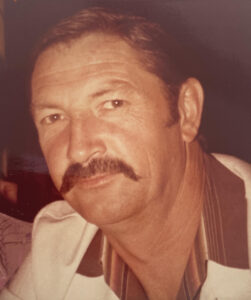
Cedric Ian Permezel (Ian) was born in Yackandandah on 14 July 1937, the fourth child of Yniol (Bob) and Margaret (Jean) Permezel. His arrival coincided with the anniversary of a profound family loss: on 14 July 1915, his uncle, Cedric Holroyd Permezel, died aboard the hospital ship HMHS Gascon after being wounded at Gallipoli and was buried at sea. In honour of Bob’s brother — the uncle who shared his birthday — he was given the name Cedric.
Ian began his schooling at Yackandandah Primary School before continuing on to Albury Grammar. His first occupation was with the ANZ Bank as a Teller, a role that led to his transfer to the Victorian coastal town of Portland. It was there that he met Jill Rosemary Huntington, and they married in 1957.
Together, Ian and Jill raised six daughters — Karen, Jennifer, Julie and Alison (twins), Elizabeth, and Sally. They made their home in Portland and later Harrow, where their first five children were born, before welcoming their youngest in Albury.
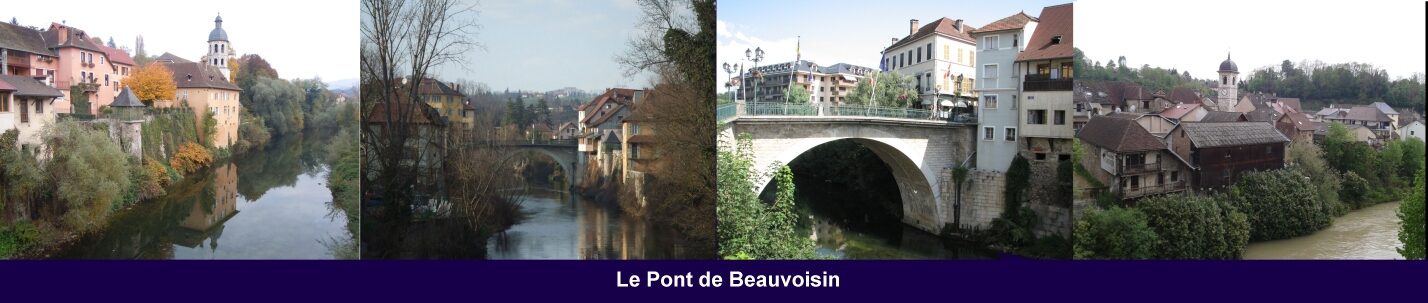
Ian eventually left the ANZ Bank and began driving petrol tankers for Shell. In 1962, the family moved to Yackandandah so he could take on the management of Bob’s business. Ian and Jill settled into the Yackandandah home named Voreppe—a name carried over from Bob’s original house in Jessie Street, East Malvern, which itself was linked to the town of Voreppe in France, south of Le Pont de Beauvoisin. Meanwhile, Jean and Bob relocated to Albury to establish a new branch of the business, which was managed by Ian’s brother, Geoff.
Family and community were central to Ian’s life. In Yackandandah, he was an active member of the Yackandandah Football Club and was recognised as one of the town’s outstanding players, highlighted by the 1964 Premiership season and a Best & Fairest award. He was equally accomplished on the golf course, winning numerous A‑Grade championships. Golf clearly ran in the family: his eldest daughter, Karen, claimed the Australian Amateur Championship in 1978—with Ian proudly caddying—and she later became a professional golfer in the United States.
Ian contributed widely to community life, serving on committees and lending his time to working bees for the football club, the golf club, and the primary school. In summer, he volunteered as a firefighter and helped prepare the local swimming pool for everyone in Yackandandah to enjoy—especially his six daughters, all enthusiastic swimmers.
Ian loved being in the bush and fishing. He also had a passion for big band music and learned to play the saxophone, performing in several bands at local balls and community events.
The business in Yackandandah was a ‘mixed’ business whereby he was a rabbit trader, sold and serviced farm equipment, farm supplies, ice and real estate. When the shop closed in the 1970s, he moved into regional sales, representing Stihl, McCulloch, Ariens, and Echo power equipment. His talent for sales was well recognised — so much so that Ariens awarded him a trip to the United States in acknowledgement of his outstanding performance.
Ian was offered a management position with Ariens in Brisbane in 1984. With their children grown and having left the nest, he and Jill made the significant decision to leave Yackandandah and start a new chapter in Queensland. Ian soon discovered that a desk job and the fast pace of city life didn’t suit him, and eventually chose to return to sales so he could once again spend his days travelling through regional communities.
Jean and Bob had moved north to Forster, NSW, seeking a warmer climate, and Ian visited them often. He grew fond of the area and wanted to be close to them, particularly as they entered their later years. In the late 1990s, Ian and Jill relocated to Cundletown, near Forster. Ian established Permezel Power Equipment in Taree, selling and servicing ride‑on mowers, chainsaws, and selling parts, with Jill working alongside him in the business. He eventually sold the enterprise and returned to real estate, though the industry had changed considerably by then, leading him to decide it was time to retire.
In retirement, Ian enjoyed playing golf at the Forster Golf Club, where Bob was also a member. He continued to enjoy his music and his time in the bush, and he was able to share those passions with his grandchildren, creating many memorable moments together.
On 29 May 1999, at the age of 61, Ian passed away, predeceasing Bob. In accordance with his wishes, his ashes were laid to rest on Big Ben, the mountain overlooking Yackandandah. His name is memorialised in the Yackandandah cemetery.
BAA. Paul Felix Olivier Permezel
Paul left Queenstown in 1948 to work on the commercial and general management side of engineering enterprises in Melbourne, in Brisbane 1970-76, and in the Pacific & Far East (based in Melbourne) 1977-86. From 1987-99 Paul ran his own engineering business located at Braeside, Victoria.
BAB. Neville Clarence Permezel
Neville was the first to leave home at Queenstown (1946) to work as an assayer at a scheelite mine on King Island. He then worked his way around Australia to settle in Perth where he did extensive postgraduate studies in biological sciences which he furthered at London, Ontario in biochemistry to obtain his M.Sc. Neville retired to Wollongong, NSW.
BAC. Elaine Marie Clemence Permezel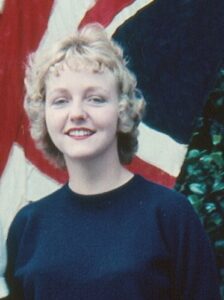
BAD. Marcus Mortimer Permezel
Marcus worked as a civil engineer in Melbourne on major construction contracts, In the mid 1960s moved back to Adelaide, eventually joining the South Australian Public Works Department to design and supervise government contracts.
BAE. David Francis Tasman Permezel
David who worked for the Australian administration in Papua New Guinea. In 1969 when David was district commissioner based at Mount Hagen. During a visit to David in Mt Hagen, Horace ruptured an aortic aneurysm from which he died.
BAF. Elizabeth Marie Louise Permezel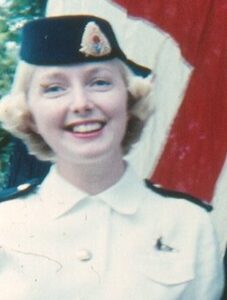
Elizabeth worked for a time as an air hostess with TAA (Trans-Australian Airlines).
BAG Rosemarie Margaret Grace Permezel
BCB. Rodney Amédée Permezel
Rod was the second son of Evan Paul Permezel. He followed a career in antiques and remained single throughout his life. The following is taken from an article advertising the sale of Rod’s antique collection following his death:
“For many regular Leonard Joel clientele, Wednesday viewing days are an unmissable ritual that forms part of their weekly routine, serving as both a shopping exercise and a social event. This was true for long-time patron, Rodney Permezel. Every Wednesday, he would be seen visiting all departments, effortlessly engaging in lengthy discussions on antiques or art, often leaving all parties much the wiser. Indeed, many clients and staff knew Rod by name, or if not by name, by his unmistakable uniform: formal blazer, tie, chinos, beret, gloves, and leather briefcase. I have many fond memories of talking to Rod on his regular Wednesday visits, where he keenly bestowed priceless information. Rod was remarkably conversant on a variety of art and antique subjects, and his collection is an assemblage of this keen interest in and knowledge of antiques.
Having a rich colonial family history, Rod fostered his affinity for history and design during his days as an Interior Design student at RMIT, and through experience in the soft furnishing department at Georges in the late 1950s. In the early 60s, he opened an Interior Design practice before transitioning into the antiques trade, opening a shop on Malvern Road, Outpost Antiques and later Design House on High Street, Armadale. The shop closed in the mid-1980s, but this did not stop Rod’s passion from his Armadale home, where he continued to research, with copious notes and books that documented and complimented his collection.”
BD. Descendants of Lester Quintus Permezel
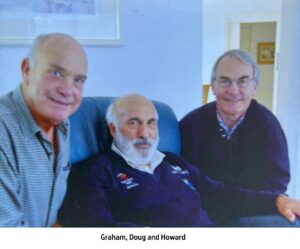
BDA. Graham Lester Permezel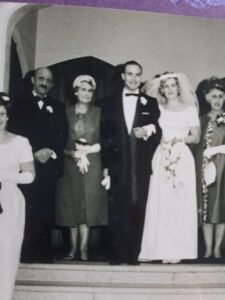
Graham’s life was one of faith, family, achievement and service.
He attended Caulfield Grammar School, where he became a Prefect and greatly enjoyed his time in the Cadets. His Christian faith had a profound and lasting influence on his life, shaping his values and the way he approached his family, work and relationships.
After finishing school, Graham began his long and successful career with G.J. Coles & Co. in 1956 as a Junior Salesman. Over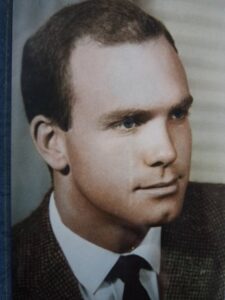 the following 37 years he progressed through a remarkable range of roles, from Storeman and Department Manager to Buyer, Senior Controller and ultimately General Manager, Personnel Operations. He retired from Coles in July 1993 with many happy memories and no regrets.
His Christian commitment also led him to become Executive Director of Insight for Living, a US-based Christian ministry, in 1995. Graham and Jan built a loving family and raised three daughters. He took enormous pleasure in his seven grandchildren, spending much time with them and creating many treasured family memories.
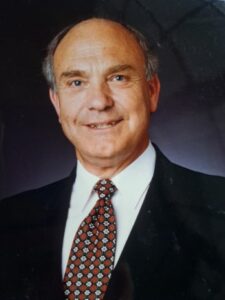
In later years, Graham developed Alzheimer’s disease. Jan lovingly cared for him at home for many years before he moved to a nursing home in Vermont. Graham died peacefully on 27 July 2024, with Jan and his family by his side.
BDB. Douglas Gordon Finlayson Permezel
Son of Lester. Brother of Graham and Howard. His middle name ‘Gordon’ recognised his mother’s brother Gordon, and ‘Finlayson’ was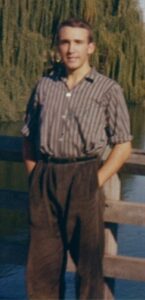 the maiden name of mother’s mother.
Educated at Caulfield North Central School and Caulfield Grammar School. Enrolled at Monash University ( Politics 1) and subsequently The University of Melbourne in Modern Government, but did not complete either course, finding his niche at RMIT where he was the top graduate in his year with a Diploma of Advertising.
In his childhood, Doug displayed ingenuity, and living in East St Kilda (37 Lansdowne Road) where the garden featured deep soft sandy soil, the backyard was pocked with his deep underground huts, not dissimilar to army style trenches and tunnels, with corrugated iron sheets for roofing. That he and others were never trapped in a cave-in was tribute to his engineering skills. He also built huts in a large gum tree, without incident. Doug joined the neighbourhood kids building ‘billy carts’ to race down the street towards the end where ‘danger hill’ was respected for a steep descent, sharp turns and incorrect camber. The locals were smart enough to post lookouts for oncoming cars, and there were no serious injuries other than a few scratches and loss of pride. He loved dogs, especially the family cocker spaniels (‘Rajah’ and ‘Goldie’) which he raced around the local streets. In later life he had a golden retriever (‘Reeva”) and a kelpie (‘Peter.’) As with many youngsters in the area he had a ‘paper round’ delivering the morning newspapers from his bicycle to local residents.
The family took school Spring and Summer holidays renting a cottage at Dromana, swimming and playing at the beach. Doug loved the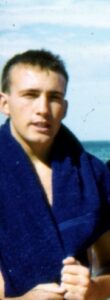 seaside and at one stage almost joined the Brighton Sea Scouts. Swimming at the Middle Brighton Baths was a regular activity, depending on the weather. So keen was he to improve, he took lessons (at the then ‘Beaurepaire Pool’ in Batman Avenue Melbourne) with the famous coach Gus Froelich, who had been an Olympic champion in Germany and who trained some very successful Australian swimmers.
After leaving school, Doug worked at a variety of interesting jobs including as a ‘chalkie’ manually recording buyer and seller bids on the blackboard of the Melbourne Stock Exchange. Taking a keen interest in shares ended in a setback, where he lost a considerable investment in the famous rise and fall of Poseidon NL, which crashed after the discovered nickel deposit was found to be low grade.
He worked in the Victorian Sales Department of BHP, and the Victorian Department of Agriculture. He was attracted to the advertising industry where he worked for many years particularly promoting agricultural and industrial equipment through specialist magazines and journals. At one stage he was appointed to a project in Fiji, where he made clear his strong aversion to tobacco advertising, and it seems that upset some influential people, so he returned home earlier than expected.
In 1960, father (Lester) purchased a holiday house at 3489 Nepean Highway Sorrento. It had a bathing box on the nearby Point King beach, and Doug spent many happy holidays there. He joined the Portsea Surf Lifesaving Club in 1964 where he obtained his Bronze Certificate, becoming a qualified lifesaver, participating in national carnivals, and making numerous lifelong friends. He was the voluntary editor of ‘The Boomer’ which was the club’s newsletter. The nearby dangerous surf beaches were a challenge and fortunately his superb fitness and swimming techniques came in handy when trapped in a rip off the Rye back beach, and where a Police rescue came to his aid. Notwithstanding the massive risk, one very carefully chosen day, Doug paddled his surf ski across ‘The Rip,’ the notorious entrance to Port Philip Bay. His associates were astounded, but he earned considerable respect for the successful if not unique effort.
Doug had an entrepreneurial spirit and purchased a van which he converted into a mobile hamburger shop. Complete with refrigeration, gas and cooktops, the van was emblazoned with his chosen advertising logo: ‘BERT BOOMER BURGER’. His target sales outlet would be hungry holiday makers in summer at Portsea. Having stocked the van with meat, buns, onions, sauces, a cash till with small change, etcetera, he opened business in the car park above the Portsea Lifesaving Club. With the magical smell of onion and sizzling beef wafting in the breeze, sales started quickly, shortly followed by the proprietor of the nearby Milk Bar, who warned him to leave or face some nasty consequences. A rapid exit followed. Unfortunately Doug had no permission to be there, and the existing shop had exclusive rights from the local council. Whilst temporarily crest fallen, Doug got over it, and earned another badge of friendly support from his mates.
Doug relished good company and was generous with his spare time. He was charitable and devoted several years working with the (then) Crippled Children’s Association, often escorting and supporting children at weekend camps. He joined Lions and was a member of the Hearts of Oak Masonic Lodge at Brighton, serving as a steward after meetings. That Lodge was formed by yachtsmen, and Doug enjoyed many voyages with the members. On one trip aboard the famous 26 Tonne ocean going yacht ‘Winston Churchill,’ he helped beneath deck as a kitchen hand which was a mixed blessing. Having washed up after a meal, he tipped a basin of washing water into the 300 metre deep Bass Strait. Under the soapy bubbles, the basin also contained the ships compliment of cutlery which made quite a splash.
Doug enjoyed the fellowship and challenges at Hash House Harriers, where he often helped with course layouts and catering. In later life he undertook odd jobs including taxi driving (with his superb sense of direction), dog walking and minding, and lawn mowing.
Doug was adventurous, free spirited, loving, caring, impulsive, friendly, with a big heart and valued trusty friends. He was especially close to cousin Peter, and often visited nearby cousins Neil at Kew and Clive at Camberwell. He passed away aged 69 years without descendants.
BDC. Howard Arthur Permezel
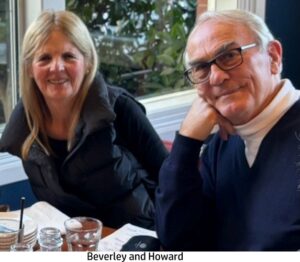
Howard is the 3rd son of Lester. Married to Beverley. Father of Danielle (1969) and Juliette (1974). Educated at Caulfield Grammar School, Melbourne. At Caulfield Grammar participated in athletics, swimming and basketball. In the 1959 School Sports at Olympic Park Under 16 years 4 x 100 track relay, his relay won and set an Associated Public School record of 47.4 seconds, which stood for 18 years until eclipsed by Scotch college in 1977 with 47.1 sec.
He joined the Australian Department of Trade in 1964 and subsequently served in Melbourne & Canberra, and Australian Consulates General in New Zealand (Consular Affairs and Trade Officer, Auckland) 1969-1972, and Bahrain (Vice Consul Administration) 1972-1973. He was seconded to the IDCA (Industrial Design Council of Australia) Melbourne 1967-1968 and assisted with administration of the inaugural Prince Philip Prize for Industrial Design. In 1990/91, Howard was seconded to a major mining company in Melbourne as International Affairs Officer, Corporate & Government.
Howard holds a Diploma of Export , Victorian Division of The Australian Institute of Export. He also served there as Fellow and Vice President for several years. He is a graduate of Defence Department Industrial Mobilisation Course 1986.
Howard was awarded a Commonwealth Public Service Centenary Medal for services to export, Parliament House Canberra, 2001. He retired as Regional Trade Commissioner (Melbourne) in 2008 from the Australian Trade Commission (Austrade).
In retirement, Howard is a volunteer Tutor in Current Affairs, University of The Third Age (Manningham) for several years. He and his wife Beverley visited Hawaii in 2017 and have toured many parts of Australia. They cruised the Kimberley coast from Darwin to Broome in 2025. They have a holiday house at Anglesea and a golden retriever ‘Harry.’
Howard is ably supported by Bev as partner and mother, who earned an Australian Dental Association Diploma of Dental Nursing, and assisted dentists for many years in several Melbourne practices.